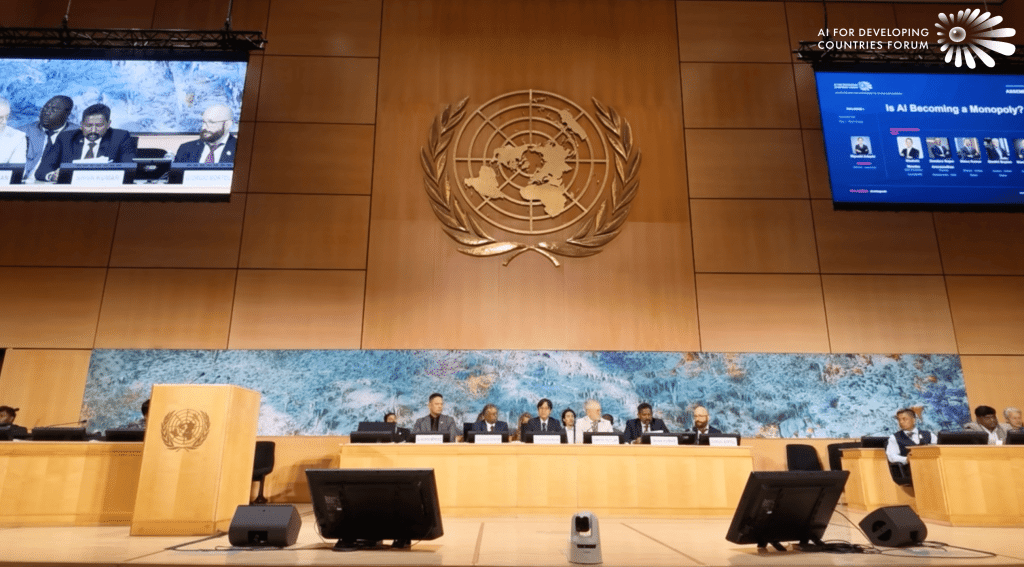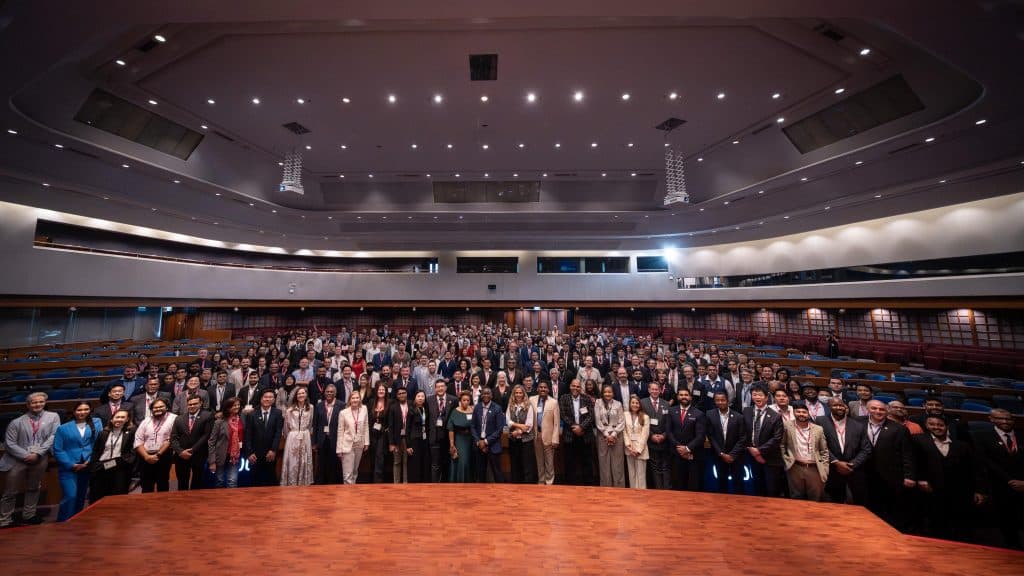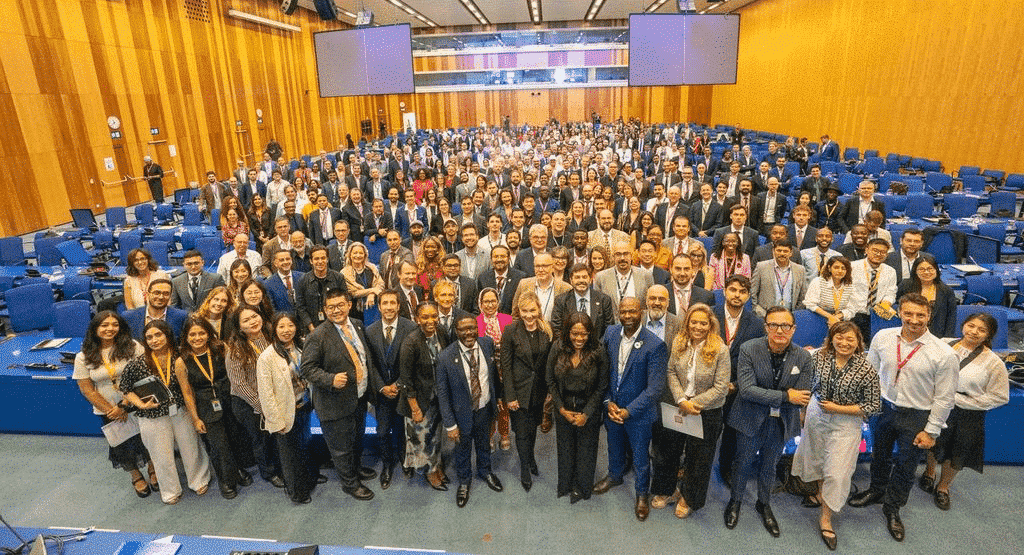
The AI for Developing Countries Forum (AIFOD), which publishes this site, organised the AIFOD Vienna Summit 2025, which took place from 15 to 17 July 2025 at the United Nations Office in Vienna. Leaders from more than 80 countries gathered to address global disparities in artificial intelligence and establish cooperative frameworks for the Global South.
On 15 July 2025, the summit opened under the theme "AI's Unequal Future". Summit Director Velynne Ji and AIFOD Founder Tianze Zhang highlighted that developing nations received under 1% of global AI funding, leaving 2.6 billion people offline. Zhang noted that while the United States invested $470.9 billion in AI in 2025, emerging markets in Brazil, India, and Indonesia achieved annual growth rates of 28.61%, 34.4%, and 28.65%, respectively. Other sessions addressed institutional governance: Wendy O’Brien of the UNODC presented on crime prevention in "AI Investment for Humanity", Andrea A. Jacobs of Antigua and Barbuda addressed small island digital governance, and Idibek Kalandar of Tajikistan highlighted Central Asian digital connectivity. A roundtable moderated by Lorenzo Larini contrasted a potential half-trillion-dollar loss under inaction against a $1.2 trillion GDP addition by 2035 if frontier markets adopted AI.
Discussions on 16 July 2025 shifted to "Bridging the Funding Gap". Oliver Grenet opened the proceedings before Congressman Brian Poe Llamanzares outlined the Philippines model for public-private partnerships (PPPs) that retain sovereign ownership of critical digital infrastructure. The "PPP Models That Work" panel discussed technical collaboration and employment, while Juraj Hostak of Slovakia presented real-time AI governance mechanisms. A panel on blended finance mechanisms examined risk mitigation through public capital, featuring contributions on edtech from Ukë Smajli, startup financing from Diego Torres, African payments from Mojisola Ologe, fintech tools from Daria Vartanova, and Indonesian investment constraints from Sally Taher.
The final day, 17 July 2025, examined "The Third Path: Innovative Approaches". Daniel Ojanic delivered a keynote on value creation, and Carine Allaz moderated a panel on successful cross-sector case studies featuring insights from Yogesh Gupta, Helga Stegmann, Jose Antonio Alatorre, and Sven Engel. Grzegorz Pobożniak examined legal innovation, while Mary Walker led a discussion on open-source frameworks. In the concluding panel, "Building Blocks of Digital Sovereignty Through Cooperation", speakers including Rajnish Dass, Pascal Hetzscholdt, Christian Corredoira, William ten Zijthoff, and Marcos Brigante evaluated sovereign infrastructure, data value retention, and regulatory sandboxes. The summit concluded with the signing of the Vienna Conference Consensus.
Highlights
- AIFOD convened delegates from over 80 countries at the United Nations Office in Vienna.
- Keynotes highlighted that developing nations received less than 1% of global AI capital despite rapid market expansion.
- Case studies detailed public-private partnership models in the Philippines and adaptive governance in Slovakia.
- Panels on blended finance and open-source models proposed frameworks to de-risk private investment.
- Participants concluded the three-day summit on 17 July 2025 by adopting the Vienna Conference Consensus.